
HomeBlogAknadi or Nimukha Tree Identity and Uses Explained

Aknadi or Nimukha Tree Identity and Uses Explained

Story Roadmap

Aknadi or Nimukha Tree Identity and Uses Explained

Identity:

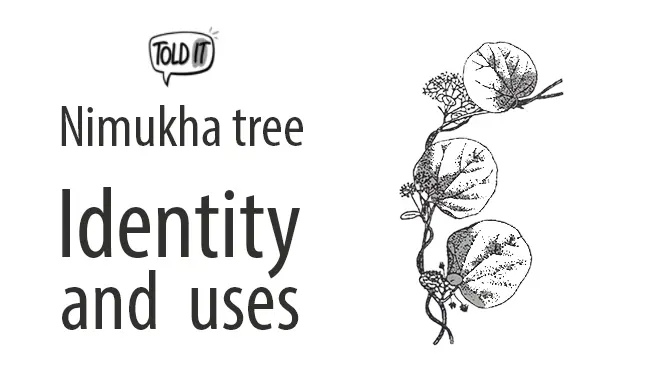
Here, this is considered a climbing plant. If it grows near a large tree in the garden or along a fence, it climbs upward using the tree or the fence for support.

Uses:

Medicines are made from the roots, stems, leaves, and other parts of the Aknadi plant.

Many difficult-to-cure diseases are believed to be alleviated with it.

If a patient is suffering from cholera, five grams of the fresh root of the climbing plant should be ground with a small amount of water, and the entire mixture should be combined with fresh sour curd made from cow’s milk. If the patient consumes this once, the severe diarrhea stops, and the vomiting tendency decreases. However, it is essential to ensure that the patient continues to urinate.

For that reason, mix one and a half teaspoons of table salt, one teaspoon of sugar, and one teaspoon of lemon juice into a glass of cold water. This mixture should be given to the patient repeatedly, three to four spoonfuls at a time.

If after the first dose the diarrhea decreases but still continues in small amounts, then after three hours another dose of the ground fresh root mixed with the same amount of sour curd should be given.

Leucorrhea can commonly appear from the time of the first menstruation. If proper measures are not taken from the beginning, there is a risk of developing many serious conditions in the future. Five fresh tender leaves of the Aknadi plant should be ground with a little water, then mixed with half a glass of cold water.

Add one and a half teaspoons of sugar or powdered rock sugar to make a sherbet. Drinking this provides significant relief from the condition.

If a mother’s breast milk becomes contaminated, the infant may suffer from various illnesses—such as bloating, stomach pain, and diarrhea. Grinding the fresh tender vines and leaves of the Aknadi plant—and some root if possible—with a little water and mixing ten milliliters of its juice into a cup of cold water and giving it to the mother provides beneficial results.

It should be taken twice daily—morning and evening. Taking it regularly for ten to twelve days is beneficial.

Additionally, this plant is considered helpful for conditions like sediment in urine, diarrhea, family planning purposes, sprains, and minor bone fractures.

Related articles:

Cashew Tree (Kajubadam) Identity and Uses Explained

Identity:The cashew is a bushy, evergreen tree that grows...

Karpas Tree (Cotton Plant) Identity and Uses Explained

Identity:The karpas plant is beneficial in treating many kinds...

Keu Tree Identity and Uses Explained

Identity:According to ancient Ayurvedic texts, this herb was also...

Camphor Tree (Kapur) Identity and Uses Explained

Identity:Camphor is a medium-sized tree. Its original native regions...

Kul Tree (Indian Jujube) Identity and Uses Explained

Identity:Since ancient times, Ayurvedic texts have classified kul under...

Banana Tree Identity and Uses Explained

Identity:Banana is a highly nourishing fruit and a staple...

Kamranga Tree (Star Fruit) Identity and Uses Explained

Identity:Kamranga is a medium-sized tree with many branches. It...

Kantanate Tree Identity and Uses Explained

Identity:Kantanate is a shrub-type, thorny, annual plant covered with...

Olotkambal Tree Identity and Uses Explained

Identity:This plant is very well known in West Bengal...

OL Tree Identity and Uses Explained

Identity:Ol generally occurs in two types: wild ol and...

Uchchata Tree Identity and Uses Explained

Identity:This plant closely resembles Kulekhara greens commonly found in...

Ulot Chandal Tree Identity and Uses Explained

Identity:Ulot Chandal is an annual climbing plant. Its leaves...

Amrul Tree Identity and Uses Explained

Identity:Amrul is a small, slender, creeping plant that grows...

Alubokhara Tree Identity and Uses Explained

Identity:This is a type of shrub-like tree, somewhat similar...

Ata Tree Identity and Uses Explained

Identity:The ata tree is found throughout India to varying...

Mango Tree Identity and Uses Explained

Identity:The mango is known as the “king of fruits.”...

Asasheora Tree Identity and Uses Explained

Identity:This is a shrub-type plant, very well-known throughout rural...

Anshphal Tree Identity and Uses Explained

Identity:Anshphal is a large-sized plant, growing about thirty to...

Grapes Tree Identity and Uses Explained

Identity:The grape plant is a climbing vine. It produces...

Walnut Tree Identity and Uses Explained

Identity:The walnut tree is a large, branched tree. Although...

Pineapple Tree Identity and Uses Explained

Identity:The pineapple plant is familiar to all of us....

Alkushi Tree Identity and Uses Explained

Identity:This plant is actually a climbing leguminous vine. In...

Apang Tree Identity and Uses Explained

Identity:Apang is an annual shrub-like plant. It is generally...

Ginger Tree Identity and Uses Explained

Identity:This rhizome-bearing plant is very familiar to all of...

Ayapan Tree Identity and Uses Explained

Identity:Ayapan is a small shrub. Including the top, the...