
Identity:
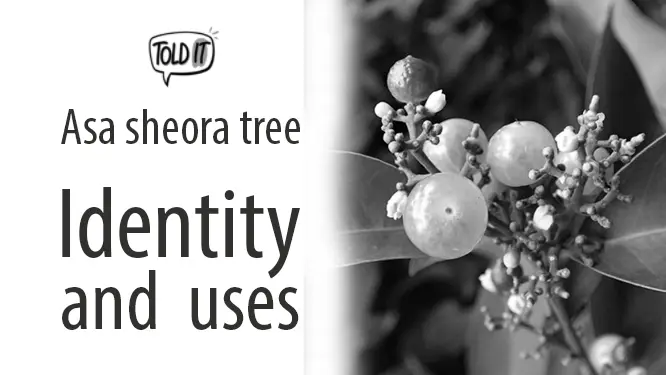
This is a shrub-type plant, very well-known throughout rural Bengal. The plant has many branches. Its leaves look somewhat like horse ears or jamun (black plum) leaves, but much thinner in comparison. The leaves are dark green, smooth on the upper surface, and lighter underneath.
The leaf stalks emerge from the tender stems. Small white flowers appear in clusters at the base of the stalks. The flowering season is in November.
The fruits are green when unripe and become slightly sticky and yellowish when ripe. They look somewhat like large peas but are flattened on top like an orange. Fruits appear around March.
This plant grows almost everywhere in India, especially abundantly in Sikkim, Assam, and Bengal.
Uses:
People in rural Bengal use Asasheora twigs as natural toothbrush sticks. They prevent tooth decay and strengthen the gums and teeth.
The fruits of this plant are especially used for treating intestinal worms.
The leaves are highly beneficial for skin diseases. When the leaves are ground with ginger and applied as a paste, various skin ailments are cured.
Dried leaves soaked in hot water, then strained and given to a woman after childbirth, reduce postpartum weakness and increase appetite.
The bitter leaves of Asasheora are useful in rheumatic disorders, cough, and jaundice.
A decoction made from these leaves is used as a remedy for fever, liver ailments, and worm infestations.
