
HomeBlogAta Tree Identity and Uses Explained

Ata Tree Identity and Uses Explained

Story Roadmap

Ata Tree Identity and Uses Explained

Identity:

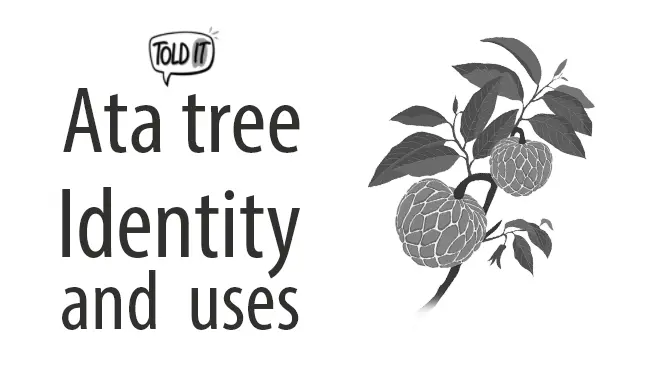
The ata tree is found throughout India to varying degrees. With many branches, the tree grows to about 10–15 feet in height. The bark is gray in color. The leaves are about 3–4 inches long and around 1.5 inches wide.

The leaf tips gradually taper. From the junction of the stem and the leaf, single or paired yellowish (ghee-colored) flowers appear. These thick-petaled flowers are about an inch long. The ata tree usually flowers in March. The fruits ripen in May–June, are green, and have a pleasant fragrance. The fruit is very sweet, almost honey-like. Inside, there are fleshy segments, and the seeds are black and flat.

Uses:

Ata leaves act as an insect repellent. The ripe fruit is strengthening and helps balance bile. Medicines are made from the pulp, seeds, and roots of the tree.

Related articles:

Kalmegh Tree (Andrographis paniculata) Identity and Uses Explained

Identity:Before administering Kalmegh for any illness, it is important...

Krishnakali Tree Identity and Uses Explained

Identity:The Krishnakali plant is generally divided into five varieties...

Kundaro Tree Identity and Uses Explained

Identity:Kundaro is considered a variety of the well-known sal...

Keya Flower Tree (Screw Pine) Identity and Uses Explained

Identity:The keya plant usually grows to a height of...

Kakmachi Tree Identity and Uses Explained

Identity:Kakmachi is a shrub-like plant that grows naturally on...

Cashew Tree (Kajubadam) Identity and Uses Explained

Identity:The cashew is a bushy, evergreen tree that grows...

Karpas Tree (Cotton Plant) Identity and Uses Explained

Identity:The karpas plant is beneficial in treating many kinds...

Keu Tree Identity and Uses Explained

Identity:According to ancient Ayurvedic texts, this herb was also...

Camphor Tree (Kapur) Identity and Uses Explained

Identity:Camphor is a medium-sized tree. Its original native regions...

Kul Tree (Indian Jujube) Identity and Uses Explained

Identity:Since ancient times, Ayurvedic texts have classified kul under...

Banana Tree Identity and Uses Explained

Identity:Banana is a highly nourishing fruit and a staple...

Kamranga Tree (Star Fruit) Identity and Uses Explained

Identity:Kamranga is a medium-sized tree with many branches. It...

Kantanate Tree Identity and Uses Explained

Identity:Kantanate is a shrub-type, thorny, annual plant covered with...

Olotkambal Tree Identity and Uses Explained

Identity:This plant is very well known in West Bengal...

OL Tree Identity and Uses Explained

Identity:Ol generally occurs in two types: wild ol and...

Uchchata Tree Identity and Uses Explained

Identity:This plant closely resembles Kulekhara greens commonly found in...

Ulot Chandal Tree Identity and Uses Explained

Identity:Ulot Chandal is an annual climbing plant. Its leaves...

Amrul Tree Identity and Uses Explained

Identity:Amrul is a small, slender, creeping plant that grows...

Alubokhara Tree Identity and Uses Explained

Identity:This is a type of shrub-like tree, somewhat similar...

Mango Tree Identity and Uses Explained

Identity:The mango is known as the “king of fruits.”...

Asasheora Tree Identity and Uses Explained

Identity:This is a shrub-type plant, very well-known throughout rural...

Aknadi or Nimukha Tree Identity and Uses Explained

Identity:Here, this is considered a climbing plant. If it...

Anshphal Tree Identity and Uses Explained

Identity:Anshphal is a large-sized plant, growing about thirty to...

Grapes Tree Identity and Uses Explained

Identity:The grape plant is a climbing vine. It produces...

Walnut Tree Identity and Uses Explained

Identity:The walnut tree is a large, branched tree. Although...