
Identity:
Ayapan is a small shrub. Including the top, the plant usually grows to a height of about two to two and a half feet. When cultivated with care, it is now grown commercially.
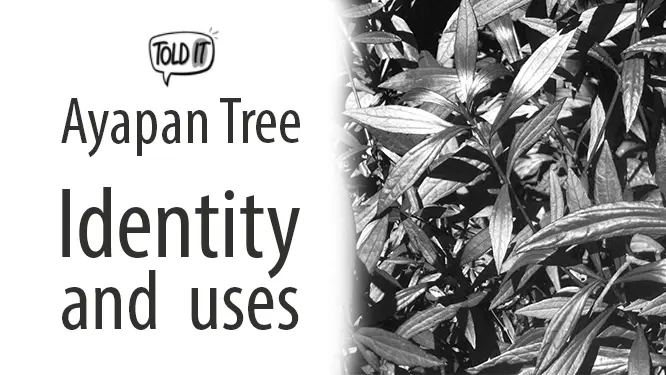
The leaves resemble those of the Kulekhara plant, with purple streaks on the leaf stalks and veins. Both the leaves and stems have fine hairs.
The stem is segmented, producing pairs of leaves at each node. Roots emerge from the lower nodes, and new plants can be grown by planting these cuttings.
At the tips of the branches, small purple flowers bloom at the end of winter. Inside the dried flowers are small seeds resembling basil seeds, which also produce new plants.
This plant cannot tolerate extreme summer heat. Throughout the summer it becomes weak, but with the arrival of the monsoon rains, it becomes vigorous again.
Ayapan is an introduced species whose original habitat is Brazil. It arrived in our region long ago, and due to its medicinal properties, its demand continues to grow steadily.
Uses:
The entire plant and its juice are used medicinally. Ayapan juice is stimulating, mildly laxative, and promotes sweating. It is especially effective in stopping internal bleeding.
Drinking the leaf juice without heating helps control hematemesis (vomiting blood) and relieves phlegmatic disorders.
A decoction or extract of the whole plant is beneficial and strengthening for heart disease. The leaf juice, when applied to foul-smelling wounds, provides relief.
In cholera patients, when body temperature drops and the body becomes cold, using this juice helps restore normal temperature.
