
Identity:
Camphor is a medium-sized tree. Its original native regions include China, Japan, and parts of Malaysia. Today, camphor trees are also planted in West Bengal and other parts of India in gardens, though these trees do not yield large amounts of camphor.
Camphor is extracted from the wood of the camphor tree using special methods. High-quality camphor, such as Bhimseni camphor, is imported into India from regions like Sumatra, Malaysia, and Kenya. The camphor imported from China is known as Chinese camphor.
Most camphor sold in markets is not extracted from the true camphor tree but from another related species.
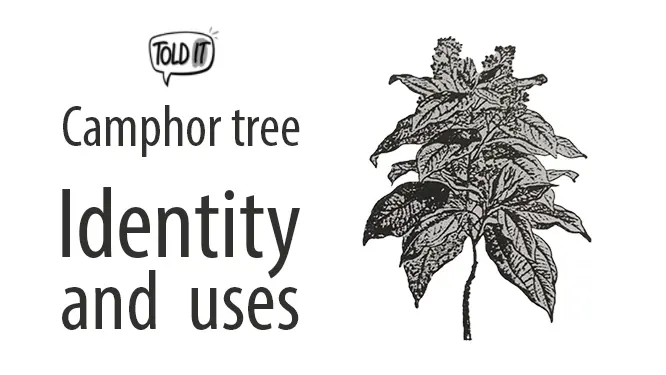
The leaves of the camphor tree resemble litchi leaves but are thinner and have three prominent veins. Small greenish-yellow flowers bloom during the months of Phalgun–Chaitra (spring). These flowers develop into jamun-like fruits, each containing a single seed.
Through specialized extraction processes, one camphor tree can yield four kilograms or more of camphor.
Uses:
Camphor has wide-ranging medicinal properties and is used both internally and externally for various ailments.
It has a bitter taste and is useful for restoring appetite and adding fragrance to food.
Camphor acts as a sedative, stimulant, aphrodisiac, and pain reliever. It is used in treating fever, whooping cough, asthma, inflammation, menstrual disorders, seminal weakness, uterine diseases, rheumatism, penile curvature, and even cancer in traditional medicine.
Consuming camphor daily in very small amounts (about one ana) with cold water helps pacify bile. Mixing camphor with mustard oil and massaging the body reduces various skin diseases and also acts as a preventive measure against skin disorders.
