
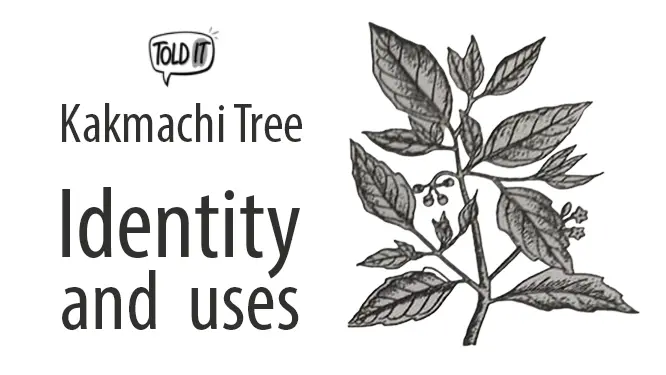
Identity:
Kakmachi is a shrub-like plant that grows naturally on its own. It is found more or less throughout almost all regions of India.
This plant mainly grows in warm or moderately temperate climates. It reaches a height of about one and a half to two feet. The leaves are about one and a half to two inches long, gradually tapering at the tip, with serrated, saw-like edges.
In autumn, the plant produces clustered flowers resembling chili blossoms, followed by fruits. Once the fruits ripen, the plant dies in summer. New plants grow again during the months of Jyeshtha–Asharh (early monsoon).
There are two common types of kakmachi. One type is dark green, with slightly longer leaves and a bitter taste; this variety is used mainly for external applications.
The other type is yellowish in color, with shorter leaves. When its fruits ripen, they turn yellowish-red. This type is widely used internally. Both varieties are commonly seen and are considered to balance all three doshas.
Uses:
The entire plant and the dried fruits are used medicinally. When ripe, the fruits turn red. Juice from the leaves is especially beneficial in treating anemia.
Kakmachi is also used in loss of appetite, intestinal worms, and painful or difficult urination. For eye discharge, itching, venomous swelling, and skin diseases such as leprosy, kakmachi is applied externally.
