
HomeBlogKarpas Tree (Cotton Plant) Identity and Uses Explained

Karpas Tree (Cotton Plant) Identity and Uses Explained

Story Roadmap

Karpas Tree (Cotton Plant) Identity and Uses Explained

Identity:

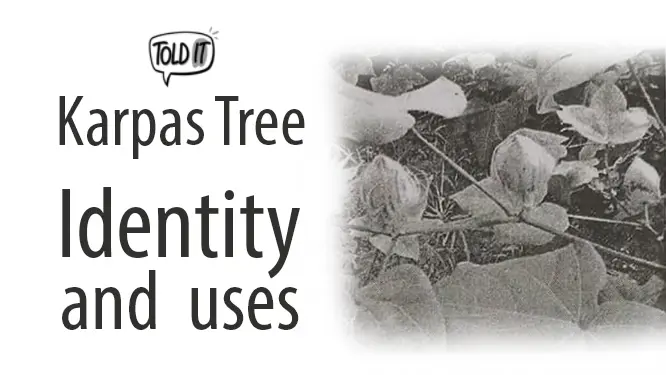
The karpas plant is beneficial in treating many kinds of diseases. Its leaves, fruits, roots, and other parts are used in the preparation of medicines.

Uses:

If three drops of juice from the unripe fruit of the karpas plant are administered into the ear in the morning and three drops again at bedtime, ear discharge (pus) is cured. After instilling the juice, the ear opening should be gently plugged with cotton.

In cases of diarrhea, forty to fifty grams of tender karpas leaves should be collected and boiled in 150 milliliters of water in an earthen or steel vessel. When the water reduces to about thirty to forty milliliters, it should be removed from the stove, cooled, and strained. Giving this decoction to the patient every three to four hours reduces diarrhea. This remedy is not only effective for diarrhea but also for fever; in fever cases, it should be given twice daily. It is considered a highly potent medicine for many ailments.

Painful or scanty urination is known in Ayurveda as mutrakricchra. This condition can arise from various causes. Ten milliliters of fresh karpas leaf juice should be gently heated, then cooled, and taken once daily in the morning. This provides relief.

In the early stages of leprosy, applying a paste made from ten grams of fresh bark from the karpas root along with twelve to fifteen flowers, ground with a little water, to the affected lesions is beneficial. However, prolonged and patient treatment is necessary.

For inflammation of the testicles, a paste made from sixty grams of powdered dried cotton seeds and thirty grams of ginger, ground with a little water, should be applied regularly. This condition is known in rural Bengal as kurgu disease. Applying the paste at night after meals is most effective, as reduced movement allows better absorption.

For wound healing, burned cotton should be applied as a dressing over the wound and secured with strips of cloth. The burned cotton should be removed every morning and replaced with fresh burned cotton before rebandaging. If this is done consistently for three to four days, the wound will heal completely.

Related articles:

Cashew Tree (Kajubadam) Identity and Uses Explained

Identity:The cashew is a bushy, evergreen tree that grows...

Keu Tree Identity and Uses Explained

Identity:According to ancient Ayurvedic texts, this herb was also...

Camphor Tree (Kapur) Identity and Uses Explained

Identity:Camphor is a medium-sized tree. Its original native regions...

Kul Tree (Indian Jujube) Identity and Uses Explained

Identity:Since ancient times, Ayurvedic texts have classified kul under...

Banana Tree Identity and Uses Explained

Identity:Banana is a highly nourishing fruit and a staple...

Kamranga Tree (Star Fruit) Identity and Uses Explained

Identity:Kamranga is a medium-sized tree with many branches. It...

Kantanate Tree Identity and Uses Explained

Identity:Kantanate is a shrub-type, thorny, annual plant covered with...

Olotkambal Tree Identity and Uses Explained

Identity:This plant is very well known in West Bengal...

OL Tree Identity and Uses Explained

Identity:Ol generally occurs in two types: wild ol and...

Uchchata Tree Identity and Uses Explained

Identity:This plant closely resembles Kulekhara greens commonly found in...

Ulot Chandal Tree Identity and Uses Explained

Identity:Ulot Chandal is an annual climbing plant. Its leaves...

Amrul Tree Identity and Uses Explained

Identity:Amrul is a small, slender, creeping plant that grows...

Alubokhara Tree Identity and Uses Explained

Identity:This is a type of shrub-like tree, somewhat similar...

Ata Tree Identity and Uses Explained

Identity:The ata tree is found throughout India to varying...

Mango Tree Identity and Uses Explained

Identity:The mango is known as the “king of fruits.”...

Asasheora Tree Identity and Uses Explained

Identity:This is a shrub-type plant, very well-known throughout rural...

Aknadi or Nimukha Tree Identity and Uses Explained

Identity:Here, this is considered a climbing plant. If it...

Anshphal Tree Identity and Uses Explained

Identity:Anshphal is a large-sized plant, growing about thirty to...

Grapes Tree Identity and Uses Explained

Identity:The grape plant is a climbing vine. It produces...

Walnut Tree Identity and Uses Explained

Identity:The walnut tree is a large, branched tree. Although...

Pineapple Tree Identity and Uses Explained

Identity:The pineapple plant is familiar to all of us....

Alkushi Tree Identity and Uses Explained

Identity:This plant is actually a climbing leguminous vine. In...

Apang Tree Identity and Uses Explained

Identity:Apang is an annual shrub-like plant. It is generally...

Ginger Tree Identity and Uses Explained

Identity:This rhizome-bearing plant is very familiar to all of...

Ayapan Tree Identity and Uses Explained

Identity:Ayapan is a small shrub. Including the top, the...