
HomeBlogKrishnakali Tree Identity and Uses Explained

Krishnakali Tree Identity and Uses Explained

Story Roadmap

Krishnakali Tree Identity and Uses Explained

Identity:

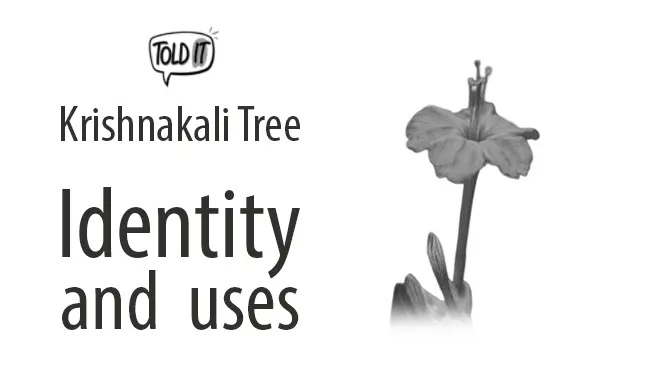
The Krishnakali plant is generally divided into five varieties based on the color of its flowers: white, black, red, white-and-red, and yellow.

The roots of the Krishnakali plant are round and elongated. The inside of the root is white with a slight greenish hue. When old roots dry out, they become hard, while new roots have a leathery texture.

The leaves of this plant closely resemble betel leaves and are about two to two-and-a-half inches long. The flower margins are cut or notched, giving them a heart-like shape. The petals are undivided. The calyx is about one inch long, and there are usually four to five petals.

Uses:

The roots, leaves, seeds, and other parts of the Krishnakali plant are used in the preparation of medicinal remedies.

To cleanse the bowels, three to four grams of dried Krishnakali seeds are finely ground. Taking this powder with a glass of cold water at bedtime after dinner helps expel accumulated waste with the morning bowel movement, thereby cleansing the digestive system.

For colds and coughs, three grams of finely powdered dried root mixed with two teaspoons of honey should be taken morning and evening. This helps cure colds, phlegm, and cough. The remedy should be taken regularly for four to five days.

In cases of nutritional deficiency, ten to fifteen grams of powdered dried root should be lightly fried with one teaspoon of cow’s ghee and consumed once daily for a few days. This helps restore nutritional balance in the body.

For hemorrhoids, thirty grams of fresh root should be placed in an earthen pot and boiled over low heat with 150 milliliters of cold water. When the liquid reduces to about 30–40 milliliters, remove the pot from the heat. Drinking the decoction and consuming the boiled root is said to provide definite relief from hemorrhoids.

Related articles:

Kalmegh Tree (Andrographis paniculata) Identity and Uses Explained

Identity:Before administering Kalmegh for any illness, it is important...

Kundaro Tree Identity and Uses Explained

Identity:Kundaro is considered a variety of the well-known sal...

Keya Flower Tree (Screw Pine) Identity and Uses Explained

Identity:The keya plant usually grows to a height of...

Kakmachi Tree Identity and Uses Explained

Identity:Kakmachi is a shrub-like plant that grows naturally on...

Cashew Tree (Kajubadam) Identity and Uses Explained

Identity:The cashew is a bushy, evergreen tree that grows...

Karpas Tree (Cotton Plant) Identity and Uses Explained

Identity:The karpas plant is beneficial in treating many kinds...

Keu Tree Identity and Uses Explained

Identity:According to ancient Ayurvedic texts, this herb was also...

Camphor Tree (Kapur) Identity and Uses Explained

Identity:Camphor is a medium-sized tree. Its original native regions...

Kul Tree (Indian Jujube) Identity and Uses Explained

Identity:Since ancient times, Ayurvedic texts have classified kul under...

Banana Tree Identity and Uses Explained

Identity:Banana is a highly nourishing fruit and a staple...

Kamranga Tree (Star Fruit) Identity and Uses Explained

Identity:Kamranga is a medium-sized tree with many branches. It...

Kantanate Tree Identity and Uses Explained

Identity:Kantanate is a shrub-type, thorny, annual plant covered with...

Olotkambal Tree Identity and Uses Explained

Identity:This plant is very well known in West Bengal...

OL Tree Identity and Uses Explained

Identity:Ol generally occurs in two types: wild ol and...

Uchchata Tree Identity and Uses Explained

Identity:This plant closely resembles Kulekhara greens commonly found in...

Ulot Chandal Tree Identity and Uses Explained

Identity:Ulot Chandal is an annual climbing plant. Its leaves...

Amrul Tree Identity and Uses Explained

Identity:Amrul is a small, slender, creeping plant that grows...

Alubokhara Tree Identity and Uses Explained

Identity:This is a type of shrub-like tree, somewhat similar...

Ata Tree Identity and Uses Explained

Identity:The ata tree is found throughout India to varying...

Mango Tree Identity and Uses Explained

Identity:The mango is known as the “king of fruits.”...

Asasheora Tree Identity and Uses Explained

Identity:This is a shrub-type plant, very well-known throughout rural...

Aknadi or Nimukha Tree Identity and Uses Explained

Identity:Here, this is considered a climbing plant. If it...

Anshphal Tree Identity and Uses Explained

Identity:Anshphal is a large-sized plant, growing about thirty to...

Grapes Tree Identity and Uses Explained

Identity:The grape plant is a climbing vine. It produces...

Walnut Tree Identity and Uses Explained

Identity:The walnut tree is a large, branched tree. Although...