
Identity:
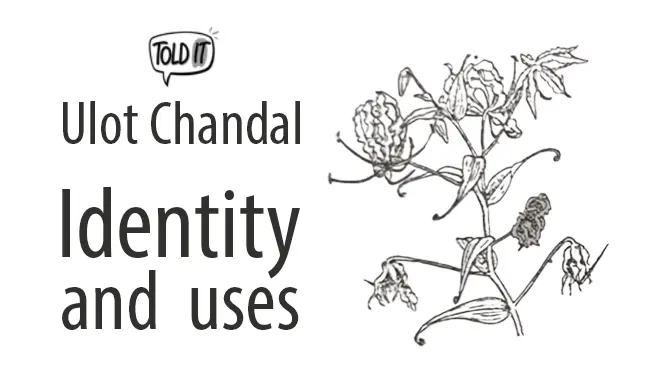
Ulot Chandal is an annual climbing plant. Its leaves are simple, alternate, and without stalks. The leaf tips gradually become long, narrow, and tend to curl. The venation is parallel.
The flowers grow singly in the leaf axils and have long stalks. There are six petals, which are long, narrow, and have wavy margins, curving upward. Initially greenish, the flowers later turn reddish-yellow. There are six stamens; the filaments are long and golden yellow. The ovary consists of three fused carpels and is superior. The fruit is an elongated capsule. The root resembles a sweet potato in appearance.
Uses:
This plant is considered heating in potency, and it alleviates phlegm and wind-related disorders. It is abortifacient, digestive-stimulating, and anti-parasitic.
Applying the juice of Ulot Chandal leaves to the scalp kills head lice. Ancient Ayurvedic texts also mention its leaf juice as beneficial for baldness.
The root is ground into a paste and slightly warmed; when applied warm to the body, it helps relieve rheumatic and nerve-related pain.
Root powder taken in very small doses (about five to ten grains) works as a tonic. It is also used to relieve colic pain, treat leprosy, and eliminate intestinal worms.
In rural areas, it is observed that after childbirth the placenta sometimes does not expel promptly. In such cases, grinding the root and rubbing it on the palms and soles of the mother helps expel the placenta quickly. Applying the crushed tuber to the lower abdomen and vaginal area of a pregnant woman is believed not to increase labor pain.
The root of Ulot Chandal can induce miscarriage.
This plant is found in many regions of Bangladesh and is also grown in gardens for its ornamental flowers.
